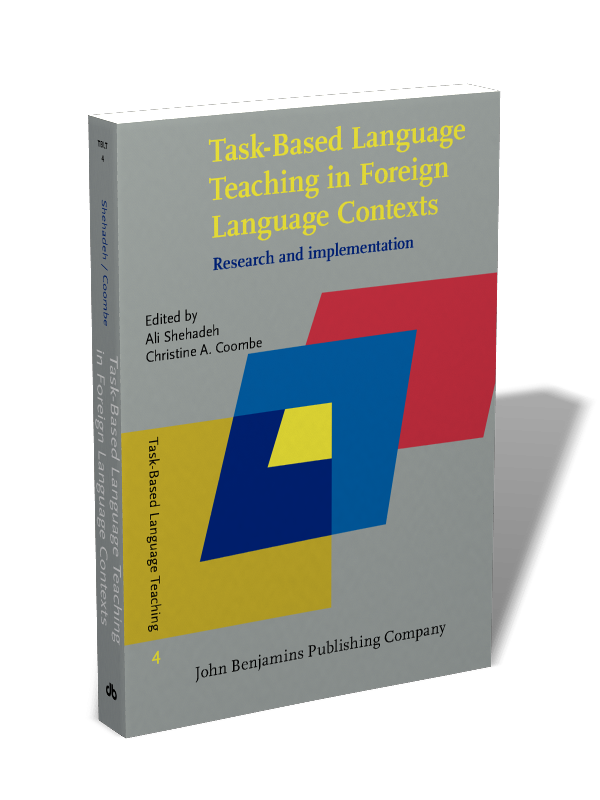
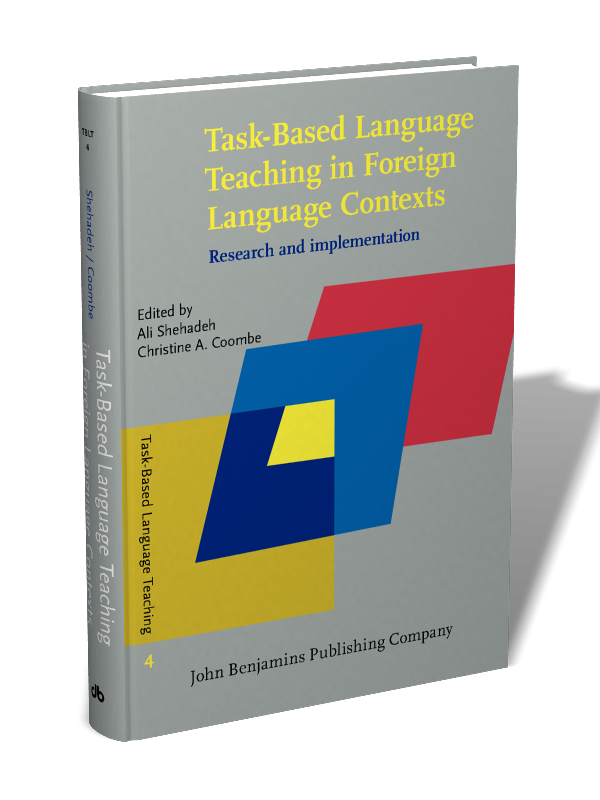
Task-Based Language Teaching in Foreign Language Contexts
Research and implementation
Editors


This volume extends the Task-Based Language Teaching: Issues, Research and Practice books series by deliberately exploring the potential of task-based language teaching (TBLT) in a range of EFL contexts. It is specifically devoted to providing empirical accounts about how TBLT practice is being developed and researched in diverse educational contexts, particularly where English is not the dominant language. By including contributions from settings as varied as Japan, China, Korea, Venezuela, Turkey, Spain, and France, this collection of 13 studies provides strong indications that the research and implementation of TBLT in EFL settings is both on the rise and interestingly diverse, not least because it must respond to the distinct contexts, constraints, and possibilities of foreign language learning. The book will be of interest to SLA researchers and students in applied linguistics and TESOL. It will also be of value to course designers and language teachers who come from a broad range of formal and informal educational settings encompassing a wide range of ages and types of language learners.
[Task-Based Language Teaching, 4] 2012. xix, 364 pp.
Publishing status: Available
© John Benjamins Publishing Company




Table of Contents
-
Preface | pp. xi–xiv
-
ForewordTeresa Pica | pp. xv–xx
-
Chapter 1. Introduction: Broadening the perspective of task-based language teaching scholarship: The contribution of research in foreign language contextsAli Shehadeh | pp. 1–20
-
Section I. Variables affecting task-based language learning and performance
-
Chapter 2. Effects of task complexity and pre-task planning on Japanese EFL learners’ oral productionShoko Sasayama and Shinichi Izumi | pp. 23–42
-
Chapter 3. Measuring task complexity: Does EFL proficiency matter?Aleksandra Malicka and Mayya Levkina | pp. 43–66
-
Chapter 4. Effects of strategic planning on the accuracy of oral and written tasks in the performance of Turkish EFL learnersZubeyde Sinem Genc | pp. 67–88
-
Chapter 5. Effects of task instructions on text processing and learning in a Japanese EFL college nursing settingYukie Horiba and Keiko Fukaya | pp. 89–108
-
Chapter 6. Task structure and patterns of interaction: What can we learn from observing native speakers performing tasks?James Hobbs | pp. 109–134
-
Section II. Implementation of task-based language teaching
-
Chapter 7. Patterns of corrective feedback in a task-based adult EFL classroom setting in ChinaNoriko Iwashita and Huifang (Lydia) Li | pp. 137–162
-
Chapter 8. Incidental learner-generated focus on form in a task-based EFL classroomPaul J. Moore | pp. 163–186
-
Chapter 9. Qualitative differences in novice teachers’ enactment of task-based language teaching in Hong Kong primary classroomsSui Ping (Shirley) Chan | pp. 187–214
-
Chapter 10. Implementing computer-assisted task-based language teaching in the Korean secondary EFL contextMoonyoung Park | pp. 215–240
-
Chapter 11. Task-based language teaching through film-oriented activities in a teacher education program in VenezuelaCarmen Teresa Chacón | pp. 241–266
-
Chapter 12. Task-based language teacher education in an undergraduate program in JapanDaniel O. Jackson | pp. 267–286
-
Chapter 13. Incorporating a formative assessment cycle into task-based language teaching in a university setting in JapanChristopher Weaver | pp. 287–312
-
Chapter 14. Language teachers’ perceptions of a task-based learning programme in a French UniversityJulie McAllister, Marie-Françoise Narcy-Combes and Rebecca Starkey-Perret | pp. 313–342
-
Epilogue. What is next for task-based language teaching?
-
Chapter 15. TBLT in EFL settings: Looking back and moving forwardDavid Carless | pp. 345–358
-
About the contributors | pp. 359–362
-
Index | pp. 363–364
“Swan (2005) claimed that task-based instruction was not suited to ‘acquisition-poor environments’ by which he meant foreign language contexts where there are limited opportunities for using the L2 outside the classroom. I have always argued that task-based instruction is, in fact, more relevant to such contexts in order to ensure that learners have opportunities to experience the L2 under real-operating conditions. Thus, I especially welcome this book which focuses on research that has investigated the design and implementation of tasks for foreign language learners.”
Rod Ellis, The University of Auckland
“If the scholarly community needed yet more evidence for the continued vibrancy of the construct task, Task-based language teaching in foreign language contexts: Research and implementation, provides just that! As editors Ali Shehadeh and Christine Coombe have assembled a far-flung group of authors whose contributions make eminently clear that TBLT has much to gain by spreading its wings geographically around the globe into diverse foreign language, as compared to second language contexts. From exciting avenues for reconsidering pressing research foci and pertinent methodologies, to the often remarkable impact of particular educational policies, to the central role of teacher education in order to make TBLT pedagogies happen in the varied settings for FL teaching and learning, to reshaping assessment in an often-times assessment-driven environment, the volume offers its readers a most welcome encouragement to think globally while acting locally on behalf of their own foreign language learners.”
Heidi Byrnes, George M. Roth Distinguished Professor of German, Georgetown University
“Exploring recent as well as new issues in TBLT research, this important book provides insights into task-based pedagogy, testing and teacher education across a wide range of foreign language classrooms and educational settings. The successes, challenges and perceptions of TBLT richly described in each of the Foreign Language contexts studied make this an invaluable contribution to current understanding of the ways in which task-based instruction can be implemented around the world [...]. Essential reading for language teaching professionals and instructed language acquisition researchers!”
Peter Robinson, Aoyama Gakuin University
“Overall, it is my belief that this volume addresses a significant gap in the literature on language education by bringing to the forefront the under-represented realities of the periphery of the English-speaking world. The dual focus of the book bridges the gap between research and practice, and the papers in the volume make a case for the feasibility of applying task-based pedagogy in a variety of settings. In doing so, the collection makes a valuable contribution to the on-going debate regarding the role of TBLT in English Language Teaching.”
Achilleas I. Kostoulas, University of Manchester, on Linguist List 24.1720, 2013
“This book demonstrates that TBLT research continues to expand and develop in new and important directions and provides original articles that make a significant contribution to TBLT Research. As such, this edited volume will be of interest to researchers as well as program directors and classroom educators looking to incorporate TBLT.”
Jason Moser, Osaka Shoin Women's University, in JALT 35(2): 223-225, 2013
“
Task-Based Language in Foreign Language Contexts successfully showcases the work of practitioners seeking to discover how to better implement TBLT in their classes. The book provides a wealth of helpful examples in the form of class materials and research inventories, all of which can be found in the appendices. This book would serve as a helpful resource for graduate students looking for examples of classroom research on TBLT. The questions and findings of the contributors will certainly stimulate lively debate as well as the desire for further investigation, especially among those committed to researching the efficacy of TBLT in second language classrooms around the world.”
Gregory Hadley, Niigata University of International and Information Studies, in System XXX (1-2), 2014
“This new book is a real find. Everyone interested in task-based learning should give a read.”
Sandee Thompson, College of the North Atlantic, Doha, in Voices issue 234, 2013
Cited by
Cited by 37 other publications
Mohammad Javad Ahmadian & Michael H. Long
2021. The Cambridge Handbook of Task-Based Language Teaching, 

Aliasin, Seyed Hesamuddin, Zahra Saeedi, Aiyoub Jodairi Pineh & Peter Wan
2019. The relationship between EFL teachers’ perception of task-based language teaching and their dominant teaching style. Cogent Education 6:1 ► pp. 1589413 ff.
Azkarai, Agurtzane & María del Pilar García Mayo
2017. Task repetition effects on L1 use in EFL child task-based interaction. Language Teaching Research 21:4 ► pp. 480 ff.
Bagheri, Mohammad
2024. The effects of task design variables and corrective feedback on EFL learners’ writing complexity and accuracy. Cogent Education 11:1
Bao, Rui & Xiangyun Du
2015. Implementation of task-based language teaching in Chinese as a foreign language: benefits and challenges. Language, Culture and Curriculum 28:3 ► pp. 291 ff.
Boers, Frank & Farahnaz Faez
2023. Meta-analysis to estimate the relative effectiveness of TBLT programs: Are we there yet?. Language Teaching Research ► pp. 136216882311675 ff.
Broady, Elspeth, Julia Huettner, Norbert Pachler & Ursula Wingate
2015. Editorial. The Language Learning Journal 43:1 ► pp. 1 ff.
Calzada, Asier & María del Pilar García Mayo
2021. Child learners’ reflections about EFL grammar in a collaborative writing task: when form is not at odds with communication. Language Awareness 30:1 ► pp. 1 ff.
Chen, Qi & Clare Wright
2017. Contextualization and authenticity in TBLT: Voices from Chinese classrooms. Language Teaching Research 21:4 ► pp. 517 ff.
East, Martin
2024. Taking communication to task once more – a further decade on. The Language Learning Journal ► pp. 1 ff.
Ellis, Rod, Peter Skehan, Shaofeng Li, Natsuko Shintani & Craig Lambert
2019. Task-Based Language Teaching,
García Mayo, Maria del Pilar & Ainara Imaz Agirre
2016. Task repetition and its impact on EFL children’s negotiation of meaning strategies and pair dynamics: an exploratory study. The Language Learning Journal 44:4 ► pp. 451 ff.
García Mayo, María del Pilar
2015. The interface between task-based language teaching and content-based instruction. System 54 ► pp. 1 ff.
Mayo, María del Pilar García
2021. Child Interaction in Task-Supported EFL/CLIL Contexts. In The Cambridge Handbook of Task-Based Language Teaching, ► pp. 397 ff.
Gilabert, Roger & Aleksandra Malicka
2021. From Needs Analysis to Task-Based Design: Methodology, Assessment and Programme Evaluation. In Task-Based Language Teaching and Assessment, ► pp. 93 ff.
Gong, Yafu & Peter Skehan
2021. A Case Study of a Task-Based Approach for School-Age Learners in China. In The Cambridge Handbook of Task-Based Language Teaching, ► pp. 432 ff.
Gurzynski-Weiss, Laura, Avizia Yim Long & Megan Solon
2017. TBLT AND L2 PRONUNCIATION. Studies in Second Language Acquisition 39:2 ► pp. 213 ff.
Han, ZhaoHong
2018. Task-Based Learning in Task-Based Teaching: Training Teachers of Chinese as a Foreign Language. Annual Review of Applied Linguistics 38 ► pp. 162 ff.
Hassaskhah, Jaleh, Behzad Barekat & Shohreh Rahimizadeh Asli
2015. The Effect of Lecturing in Student-generated Photomontage on EFL Learners’ Fluency, Accuracy and Complexity. Journal of Language Teaching and Research 6:5 ► pp. 1081 ff.
Jackson, Daniel O.
2022. Task-Based Language Teaching,
Jia, Shijiao & Madhubala Bava Harji
2023. Themes, knowledge evolution, and emerging trends in task-based teaching and learning: A scientometric analysis in CiteSpace. Education and Information Technologies 28:8 ► pp. 9783 ff.
Liu, Chunyan & Rui Guo
2020. A Study of Localization of Task-Based Language Teaching in China. Chinese Journal of Applied Linguistics 43:2 ► pp. 205 ff.
Lázaro-Ibarrola, Amparo & María Ángeles Hidalgo
2017. Procedural repetition in task-based interaction among young EFL learners. ITL - International Journal of Applied Linguistics 168:2 ► pp. 183 ff.
Michońska-Stadnik, Anna
2016. Future Teachers’ Beliefs About Language Learning. A Study on Selected Subjective Theories. In Classroom-Oriented Research [Second Language Learning and Teaching, ], ► pp. 109 ff.
Naghdipour, Bakhtiar & Stefania Manca
2023. Teaching presence in students’ WhatsApp groups: Affordances for language learning. E-Learning and Digital Media 20:3 ► pp. 282 ff.
Newton, Jonathan
2021. The Adoption of Task-Based Language Teaching in Diverse Contexts. In The Cambridge Handbook of Task-Based Language Teaching, ► pp. 649 ff.
Nguyen, Bao Trang, Jonathan Newton & David Crabbe
2018. Chapter 2. Teacher transformation of textbook tasks in Vietnamese EFL high school classrooms. In TBLT as a Researched Pedagogy [Task-Based Language Teaching, 12], ► pp. 52 ff.
Sato, Masatoshi & Susan Ballinger
2016. Understanding peer interaction. In Peer Interaction and Second Language Learning [Language Learning & Language Teaching, 45], ► pp. 1 ff.
Serafini, Ellen J.
2021. Adapting and Advancing Task-Based Needs Analysis Methodology across Diverse Language Learning Contexts. In The Cambridge Handbook of Task-Based Language Teaching, ► pp. 73 ff.
Shehadeh, Ali
2018. Task‐Based Language Assessment. In The TESOL Encyclopedia of English Language Teaching, ► pp. 1 ff.
Storch, Neomy & Masatoshi Sato
2020. Comparing the Same Task in ESL vs. EFL Learning Contexts: An Activity Theory Perspective. International Journal of Applied Linguistics 30:1 ► pp. 50 ff.
van Batenburg, Eline, Ron Oostdam, Amos van Gelderen, Ruben Fukkink & Nivja de Jong
2020. The effects of instructional focus and task type on pre-vocational learners’ ability in EFL oral interaction. ITL - International Journal of Applied Linguistics 171:2 ► pp. 153 ff.
van de Guchte, Marrit, Martine Braaksma, Gert Rijlaarsdam & Peter Bimmel
2016. Focus on form through task repetition in TBLT. Language Teaching Research 20:3 ► pp. 300 ff.
Van de Guchte, Marrit, Gert Rijlaarsdam, Martine Braaksma & Peter Bimmel
2019. Focus on language versus content in the pre-task: Effects of guided peer-video model observations on task performance. Language Teaching Research 23:3 ► pp. 310 ff.
Van den Branden, Kris
2016. The Role of Teachers in Task-Based Language Education. Annual Review of Applied Linguistics 36 ► pp. 164 ff.
Van den Branden, Kris
2021. Task-Based Language Teaching as an Innovation. In The Cambridge Handbook of Task-Based Language Teaching, ► pp. 628 ff.
Zhang, Chao & Shumin Kang
2022. A comparative study on lexical and syntactic features of ESL versus EFL learners’ writing. Frontiers in Psychology 13
This list is based on CrossRef data as of 16 april 2024. Please note that it may not be complete. Sources presented here have been supplied by the respective publishers. Any errors therein should be reported to them.
Subjects
Main BIC Subject
CJA: Language teaching theory & methods
Main BISAC Subject
FOR000000: FOREIGN LANGUAGE STUDY / General